

Sound Deadening Land Rover Defender
The new Defender kept the spirit of the original and gained modern comfort, but its cabin is still a tall, open space with a large rear door and a lot of floor. At 100 km/h on Emirates Road that shows. Tyres, wind around the mirrors and roof accessories, and a hollow sound from the rear all add up. We treat the Defender as a Defender, with its own layout, its own noise sources and its own way of being used.
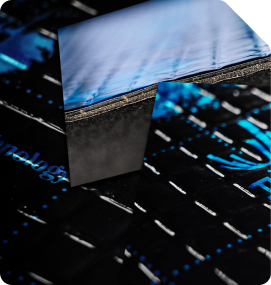
VIBRATION INSULATION MATERIAL
SGM 3-4 mm

SOUND INSULATION MEMBRANE-BLOCKER
SGM Barrier Lite
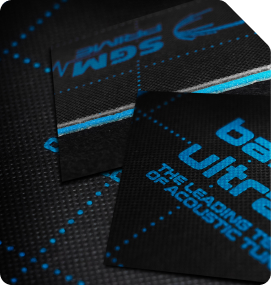
SOUND INSULATION MEMBRANE-BLOCKER
SGM Barrier Ultra

SOUND INSULATION MEMBRANE-BLOCKER
SGM 3-4 mm
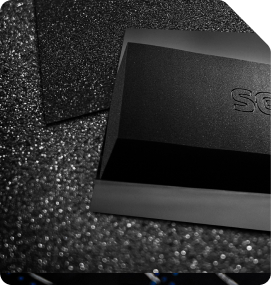
BLOCK FOR FILLING VOIDS IN THE BODY
SGM Block
WE SOLVE THE FOLLOWING PROBLEMS

01
PROTECTION AGAINST NOISE AND VIBRATIONS
We will get rid of excess noise, creaks in the cabin, and low-frequency hum
02
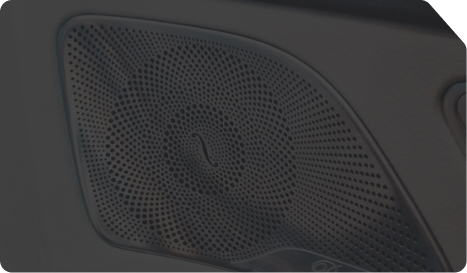
IMPROVING THE SOUND QUALITY OF FACTORY ACOUSTICS IN A CAR
The sound will become more saturated, and the bass will be deep and pleasant

03
THERMAL INSULATION
Keeps the interior cool during the hot season

04
ROAD STABILITY
Improves car behavior when driving on uneven roads

05
SILENCE IN THE CABIN
The car interior will become quieter, and the level of travel comfort will increase

06
CREAKS IN THE INTERIOR
We will resolve issues related to plastic squeaks in the cabin (for an additional fee)
CHANGES IN THE LEVEL OF NOISE REDUCTION FROM DECIBELS AT TIMES

*The change in decibels is not linear but logarithmic. Minus 1 dB is equivalent to a noise reduction of 1.26 times. Therefore, between 30 dB (almost silent) and 120 dB (plane on takeoff), there is only a fourfold difference in numbers, but colossal in reality

WE FOCUS ON QUALITY
The processing takes 2-3 days because we want to achieve maximum results and treat every surface in detail
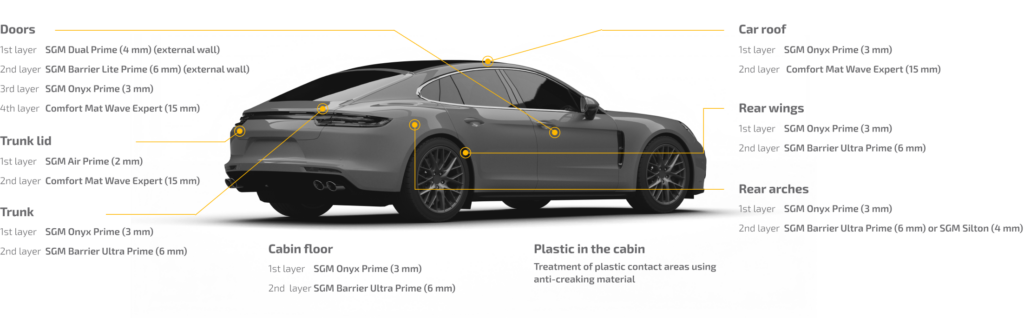
PROCESSING ZONES
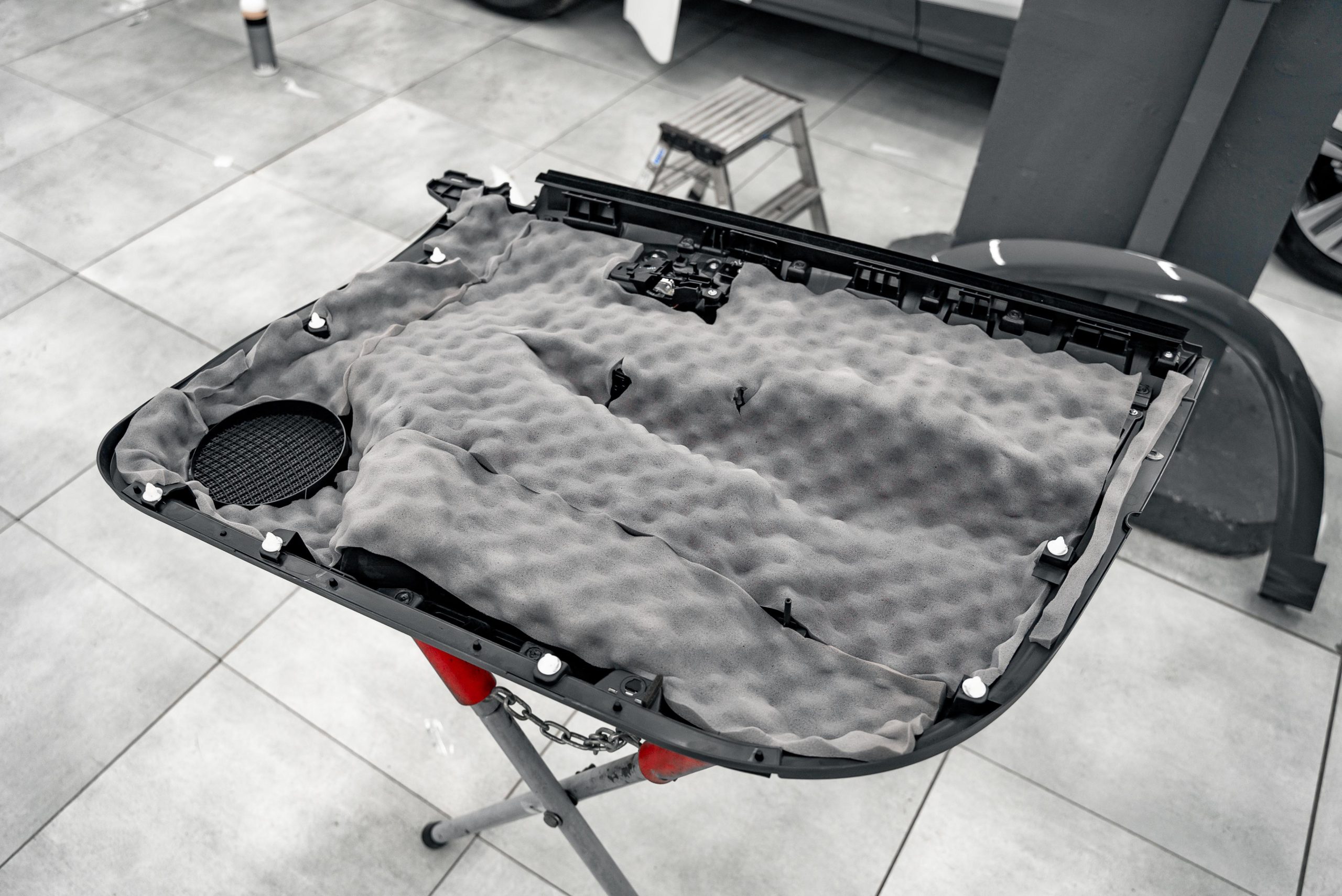
PHOTOS OF Car Sound Deadening
We record all stages of work and provide a full report on the materials used and the work done
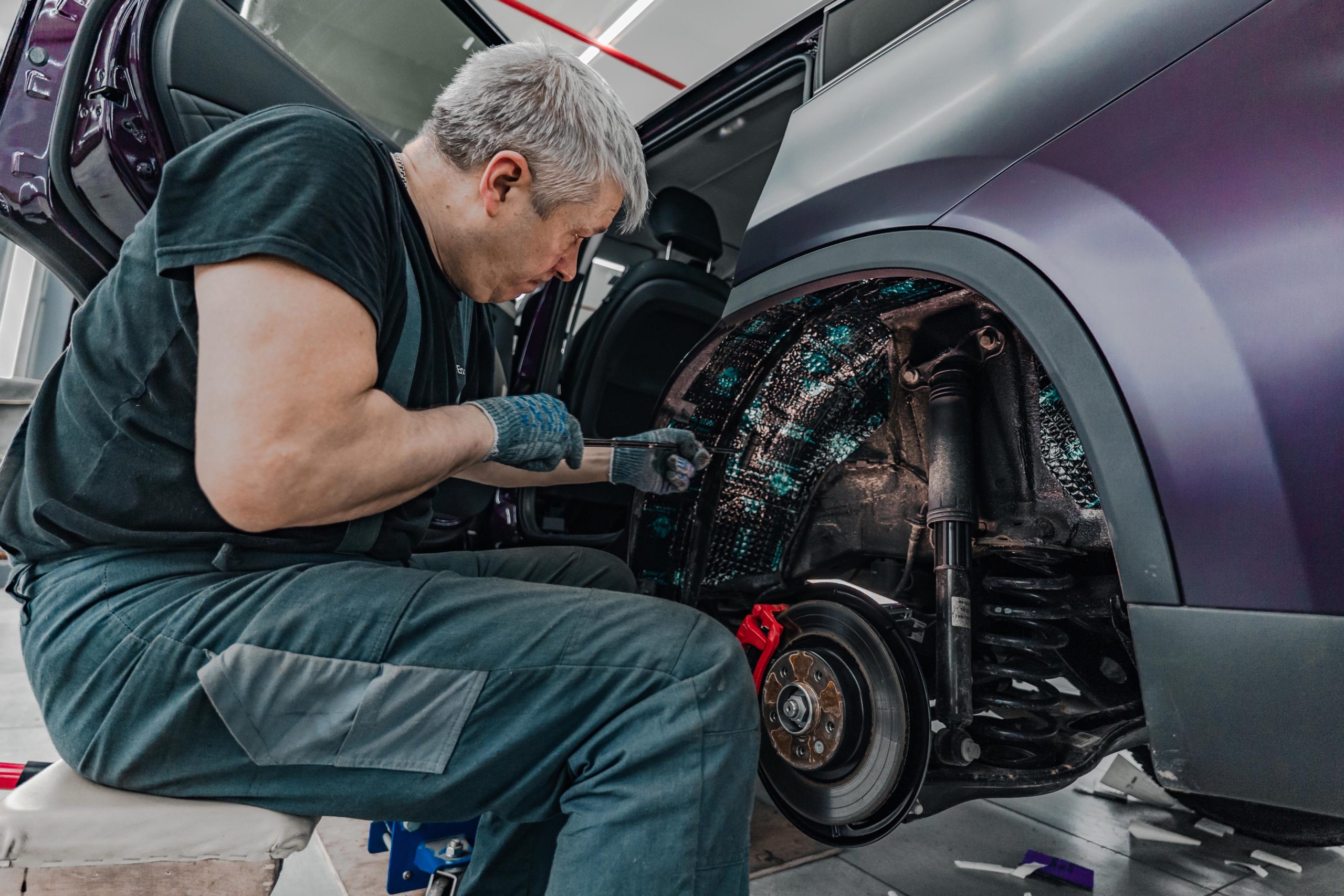
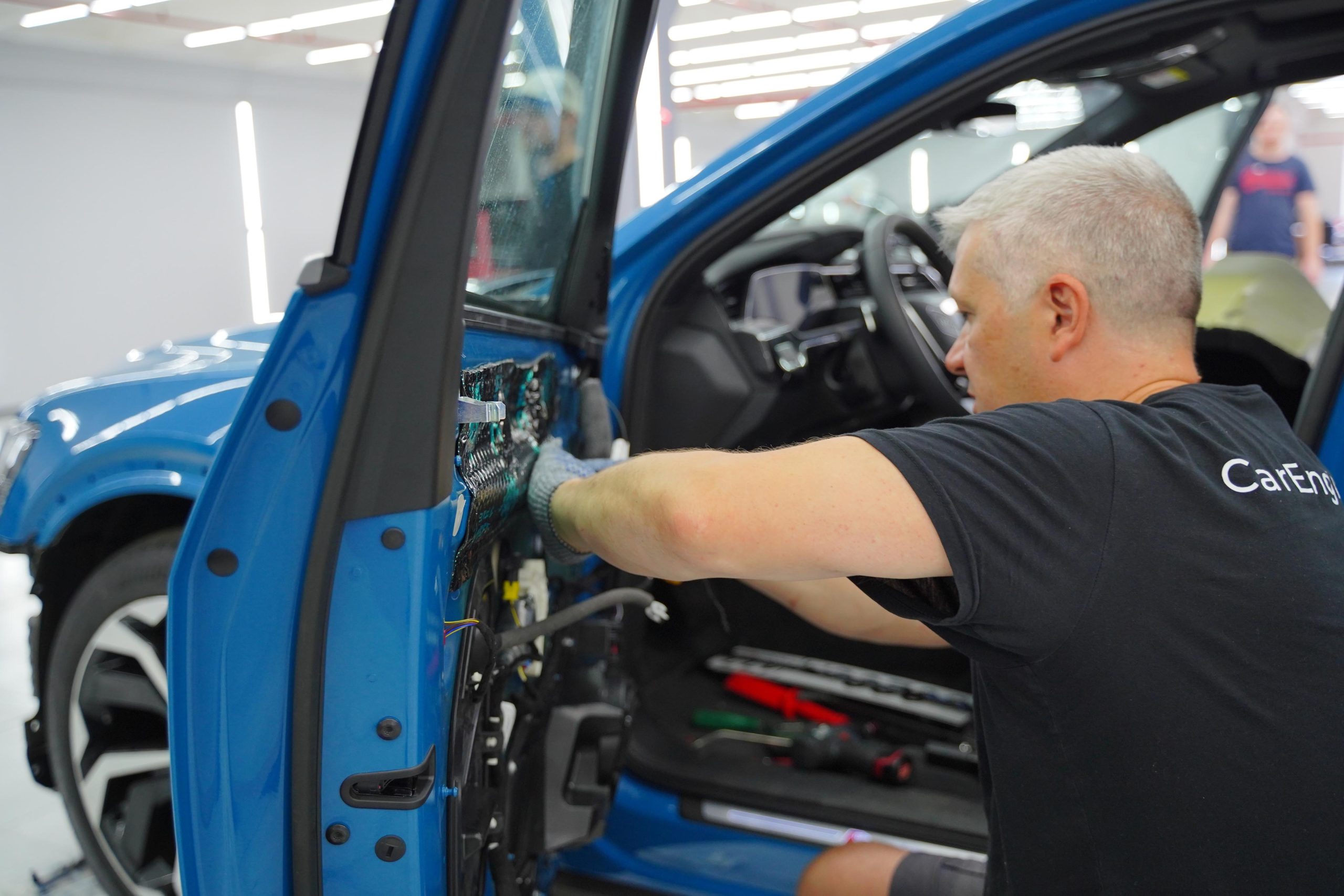
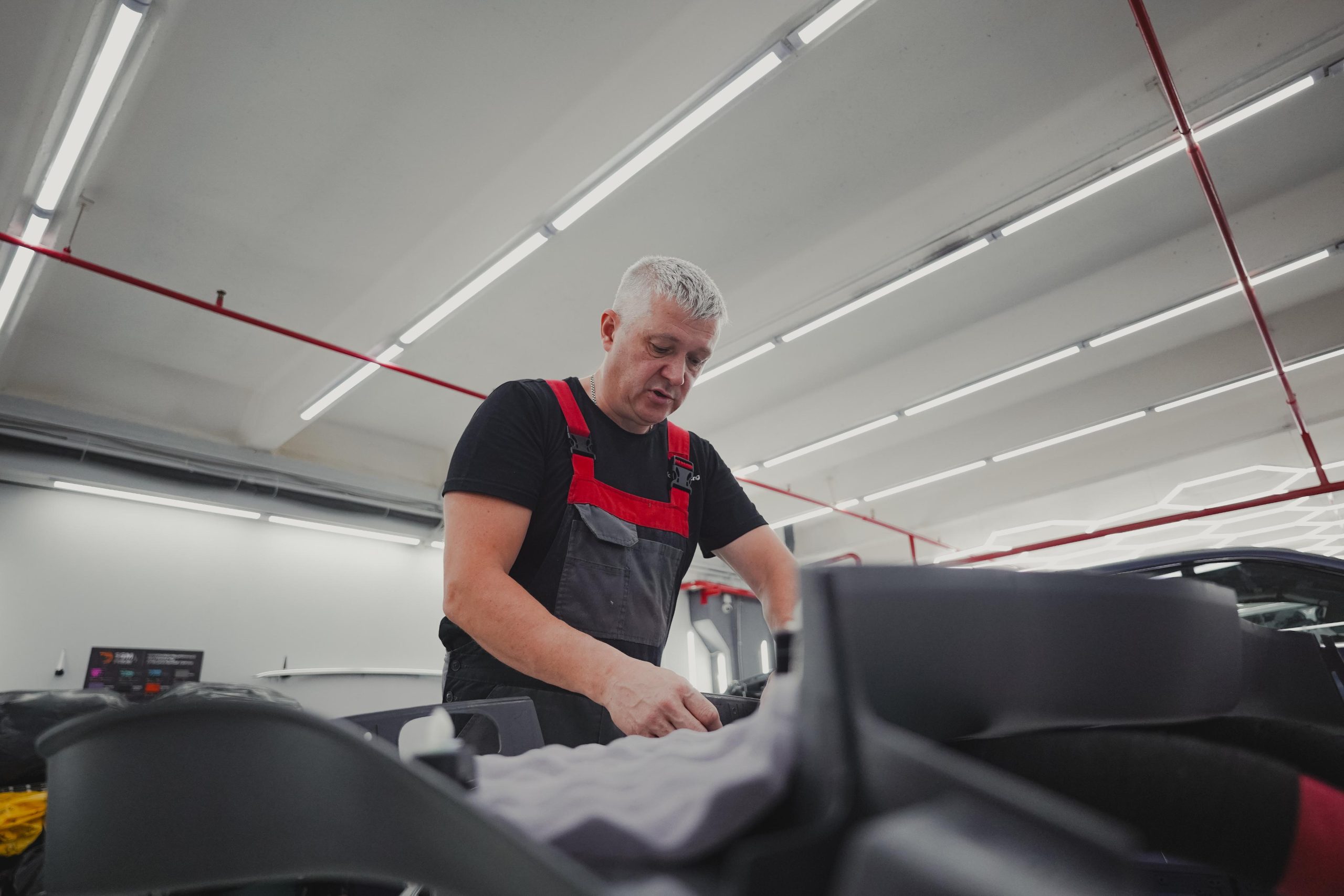
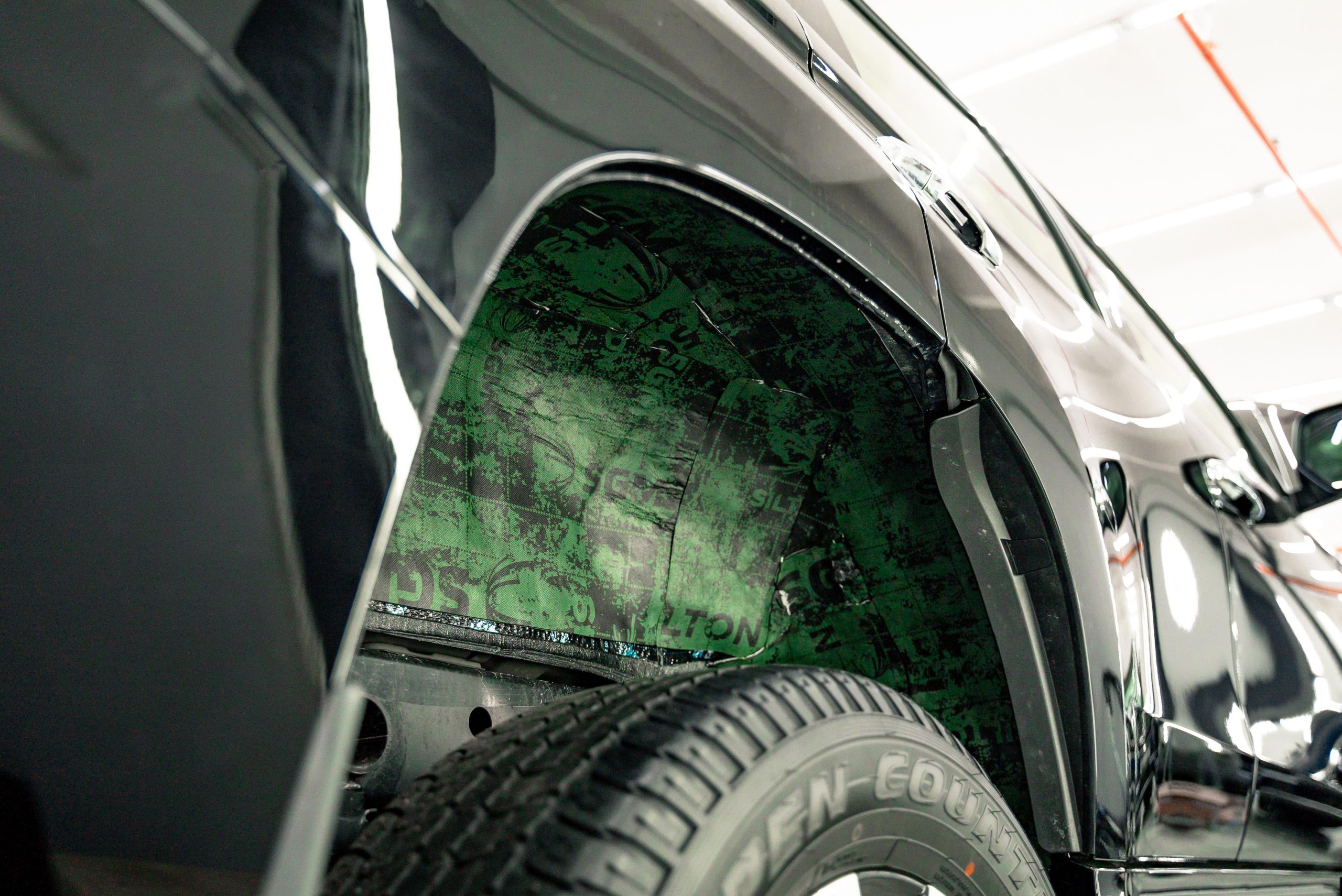
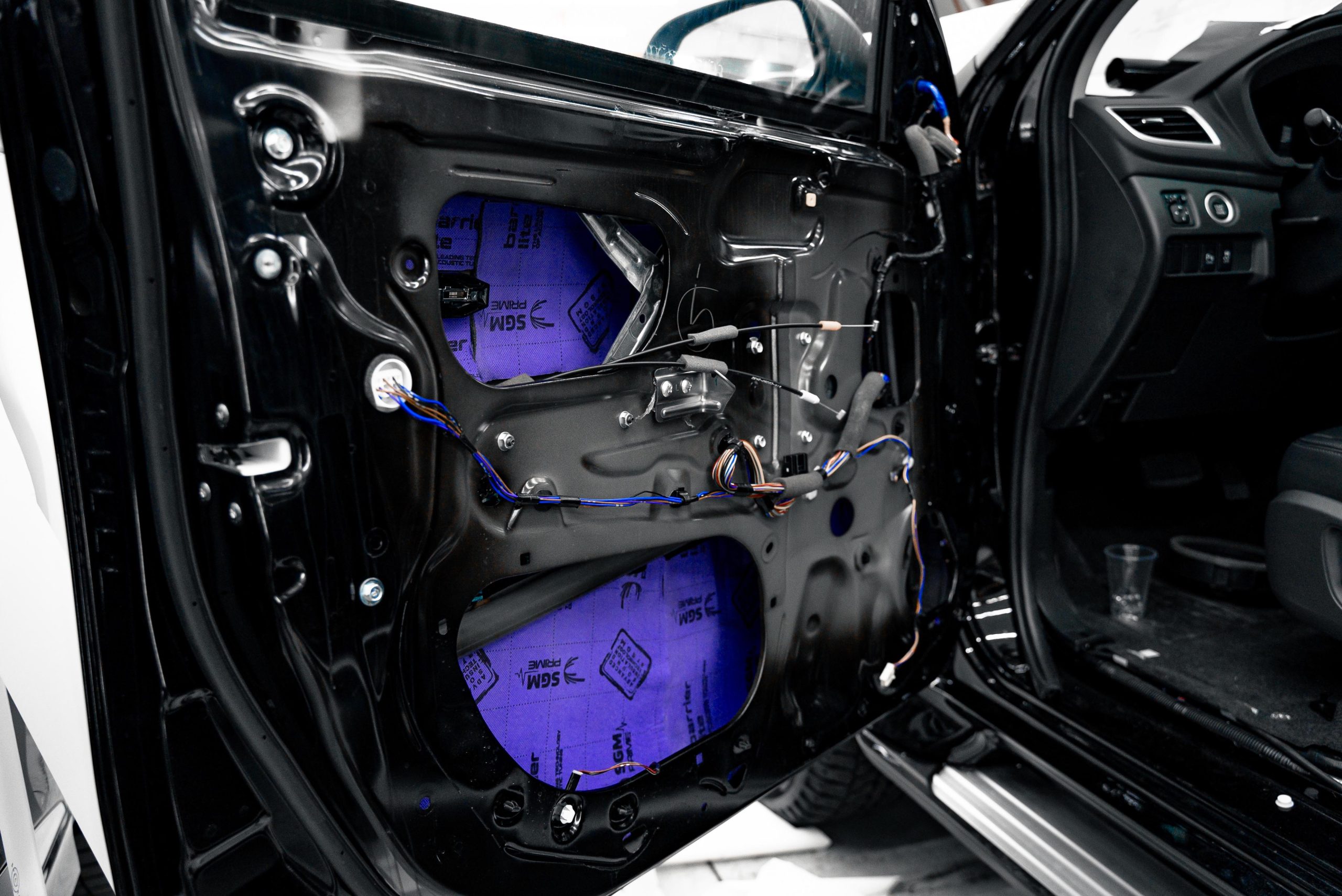
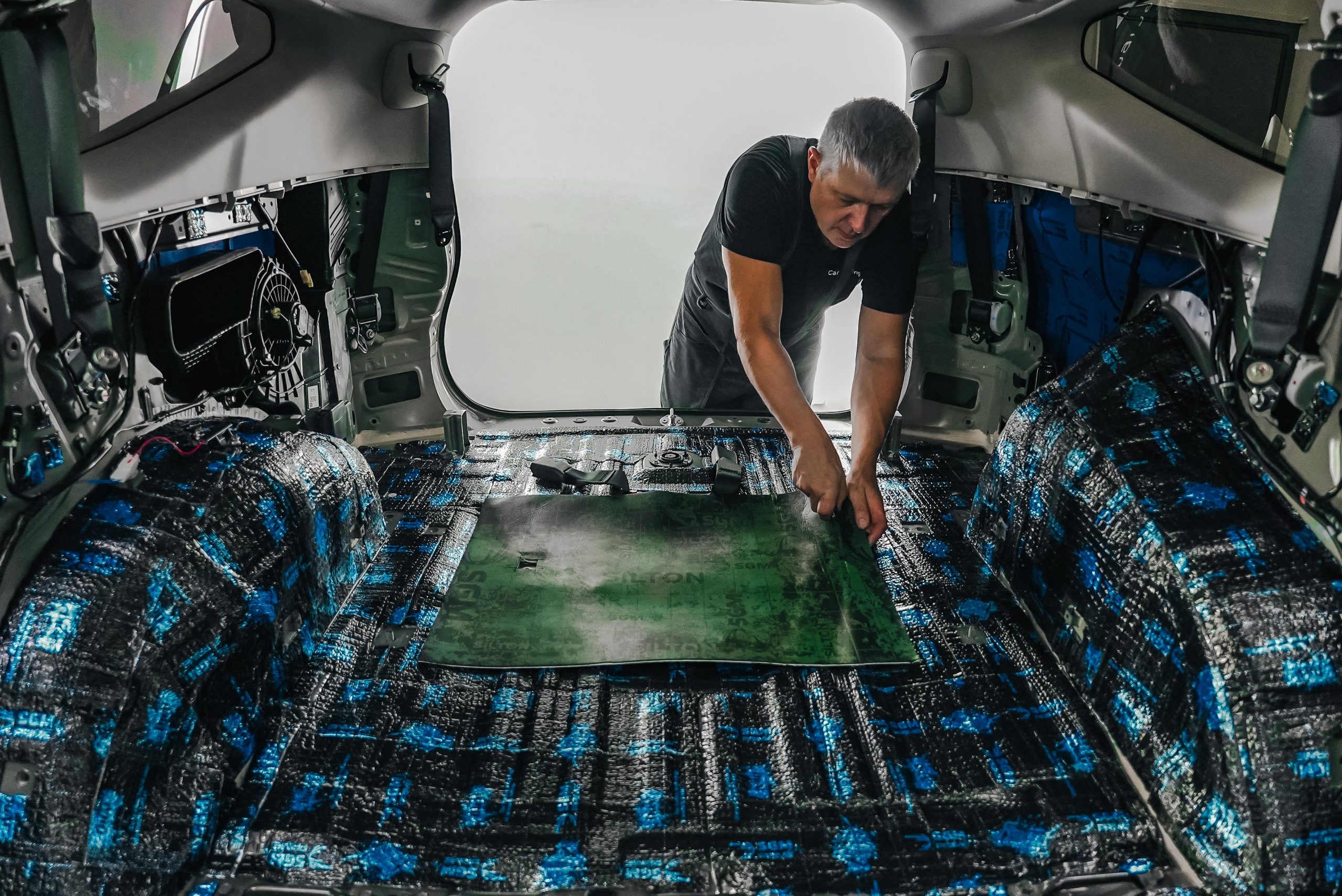
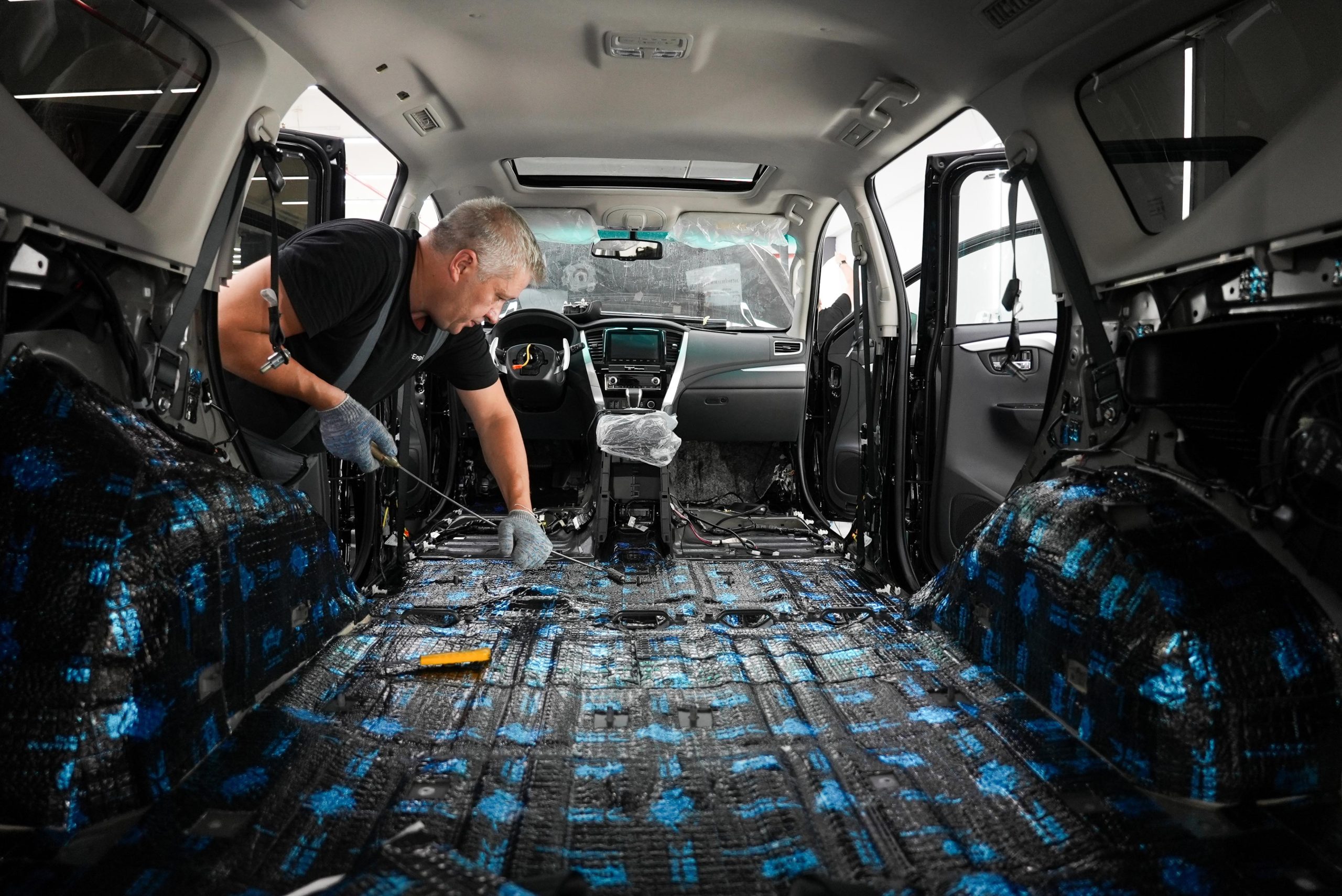
Land Rover Defender Soundproofing in Dubai
The Defender’s cabin is shaped like a box, with flat side windows, an upright tailgate and a high roof. Sound bounces around inside instead of being absorbed. The biggest sources are the floor, which picks up tyre noise, especially on all-terrain tyres; the load area and rear door, which act like a sounding board behind the passengers; and the doors, which pass on both road noise and wind. Roof racks, ladders and side-mounted gear carriers add wind noise that the factory insulation was never tuned for.
We work in layers. The SGM vibration layer, 3–4 mm thick, stops the body panels resonating. Barrier Lite or Barrier Ultra membranes block airborne noise, and SGM Block fills cavities in the body. On a Defender, we treat the floor, doors and roof as standard, and we usually recommend adding the rear door, the load area floor and walls, and the rear wheel arches. The final sound deadening package for a Land Rover depends on how and where you drive.





COST

Land Rover Defender 90, 110 or 130: What Changes
- Defender 90: the short wheelbase and large rear door mean noise from the back reaches the driver quickly. The rear door and load area make the biggest difference.
- Defender 110: the balance of floor, doors and rear zones matters most. If the car has five plus two seats, the third row sits right above the rear arches.
- Defender 130: the longest floor and eight seats. There is more surface to treat and more material, so it takes more time.
- Fabric roof: on cars with a folding fabric roof, the fabric part cannot be treated, so the work concentrates on the floor, doors and rear.
- Rubber floor: on Defenders with a wipe-clean rubber floor instead of carpet, the technician plans the floor treatment to suit that covering.
We’re known for delivering the best auto sound deadening in the city, with precision work and attention to detail.
How We Work on Your Land Rover Defender
The Defender interior is fixed with many clips and connectors, and the rear door trim, pillars and roof lining all hide wiring. Our technicians take the interior out in the right order, clean and prepare each metal surface, apply the material and reassemble everything so it fits as it did from the factory. This takes 2–3 days.
On the floor, the material is never thicker than 4 mm, so carpets and seat rails fit correctly after reassembly. Before starting, the technician asks what bothers you most, whether it is highway noise, tyre roar or the sound system, and how you use the car, and plans the zones and budget with you. Each stage is photographed, and you receive a report on what was installed and where.
Sound Deadening Land Rover Defender – FAQs
Why does sound seem to bounce around inside a Defender?
The Defender cabin is shaped like a box: flat side windows, an upright tailgate and a high roof. In most cars, curved surfaces and soft trim break up the sound, but in a Defender it reflects from one flat surface to another instead of being absorbed. That is why road noise from the floor and the hollow sound from the rear seem to fill the whole cabin. Auto sound deadening, or car sound deadening, on a Defender is about stopping the noise where it enters, so there is less of it left to bounce around.
What is the difference between blocking noise and absorbing it?
These are two different jobs, and effective sound deadening needs both, which is why automotive sound insulation is built in two layers. When you block noise, you stop it before it gets into the cabin. For airborne noise, many installers use a heavy barrier product such as mass loaded vinyl, and in our system this role is played by SGM Barrier Lite and Barrier Ultra membranes. To absorb noise means to soak up the sound that is already inside, which is what foam materials help with. Under both sits a third job, vibration control: the 3 to 4 mm SGM vibration layer, similar to what the industry calls butyl mats, stops the panels from resonating in the first place.
What will I notice first at 100 km/h on Emirates Road?
Most Defender owners notice that the steady roar from the floor and the hollow sound from behind the rear seats become much calmer. Tyres, wind around the mirrors and the rear door all add up to the noise at highway speed, and each of them is reduced by treating its own zone. The main benefits are a quieter cabin where you can talk and listen to music at normal volume, and a driving experience with less stress on long highway runs.
My Defender has a roof rack and a ladder. Will sound deadening help with the wind noise?
Partly. Roof racks, ladders and side-mounted gear carriers create extra wind noise that the factory insulation was never tuned for. Sound deadening can’t change the airflow around the accessories, so it won’t eliminate that noise at the source. What it does is make the doors and roof pass much less wind noise and outside noise into the cabin, so the overall level drops noticeably.
I run all-terrain tyres. Which zones help most with tyre roar?
The floor is where most tire noise comes in on a Defender, especially with all-terrain tyres, so it is always treated. We also usually recommend adding the rear wheel arches, because they sit right next to the rear seats and the load area. Treating the floor and wheel wells together is the most direct way of reducing road noise from the tyres and the best way to block road noise before it reaches the cabin.
Which parts of the load area do you treat?
On a Defender, we usually recommend treating the load area floor and walls together with the rear door as additional measures. This part of the car acts like a sounding board behind the passengers: the upright tailgate and the flat walls pick up vibration and send it forward into the cabin. Unlike a sedan with a small trunk lid, the whole back of a Defender is a large, open space, so this is one of the key areas where you hear a big difference.
I have a Defender 110 with seven seats. Is anything different for me?
Yes. On a 110 with five plus two seats, the third row sits right above the rear arches, so passengers in the back are close to one of the loudest noise sources. For these cars, the balance between the floor, doors and rear zones matters most, and treating the rear wheel arches makes the third row noticeably more comfortable.
Does a Defender 130 cost more than a Defender 90?
Usually yes. The 130 has the longest floor and eight seats, so there is more surface to treat, more sound deadening materials are needed and the job takes more time. On the short 90, the budget goes mostly to the rear door and load area, because noise from the back reaches the driver quickly. Car soundproofing for any Defender starts from 10,500 AED, and the final price depends on the version, the zones and the materials.
My Defender has a folding fabric roof. What can you do?
The fabric part of the roof can’t be treated, so on these cars the work concentrates on the floor, the doors and the rear. These are the zones where most panel vibration and tyre noise come from, so you still get a real noise reduction and a quieter ride, even with the fabric roof above you.
My Defender has a rubber floor instead of carpet. Can you still treat it?
Yes. Every vehicle is different, and on Defenders with a wipe-clean rubber floor, the technician plans the floor treatment to suit that covering. If you wash the floor or often get sand and water inside, tell us before the work starts. Quality automotive materials are made to seal against the metal and not absorb moisture, and the installation is planned around how you use the car.
Do you remove the roof lining and pillars? Is the wiring safe?
When the roof and rear zones are treated, parts of the interior such as the rear door trim, pillars and roof lining have to come out, and all of them hide wiring. The Defender interior is fixed with many clips and connectors, so our technicians take it apart in the right order, pay attention to every detail and put it back so it fits as it did from the factory. This careful work is a big part of why the job takes 2 to 3 days.
How do you prepare the metal before the material is installed?
Each metal surface is cleaned and prepared before any material goes on, because the mat has to bond fully to the metal with no gaps underneath. In the industry, degreasing with isopropyl alcohol is the usual way to do this. After that, the vibration layer is applied, the membranes go on top, and cavities in the body are filled with SGM Block. If you want to know more about the butyl layer or the closed cell foam in a specific product, our specialists will explain.
Can you do anything about engine noise?
The engine bay is one of the zones commonly treated in the industry when engine noise comes into the cabin. On a Defender, the main noise sources are usually the floor, the rear and the doors, so we start there. If engine noise is what bothers you, tell the technician, and the engine bay can be discussed as part of your noise insulation plan. The goal is always to protect the cabin from unwanted noise where it actually comes from.
Will treating the roof help the cabin stay cooler?
Yes, the same sound deadening materials that give sound insulation also work as heat insulation. The Defender has a high roof and a large floor, and the materials slow down heat transfer into the cabin through these surfaces. In the UAE summer this means the interior stays cooler and temperature control is easier for the air conditioning. The exact thermal insulation effect depends on which zones are treated.
Will the Defender feel different on rough roads?
Improving how the car behaves on uneven roads is one of the things our soundproofing service is designed to help with. With panel resonance under control, the Defender feels more settled and solid over rough surfaces, and there is less of the hollow drumming from the rear. Plastic squeaks in the cabin can also be fixed as an additional service.
Will the factory audio sound better in a Defender?
Yes. The front doors and rear doors carry the speakers, and when the door skins and door panels are treated, they stop vibrating along with the music. In a box-shaped cabin where sound bounces easily, this makes the car sound clearer and the bass deeper. Many owners tell us the automotive sound system is one of the things that bothers them most before the work, so we always ask about it.
Is it worth it if I mostly drive in the city?
It depends on what bothers you, which is why the technician asks before starting. Some owners are mostly troubled by highway noise, some by tyre roar, and some by the sound system. City drivers often care most about audio, rattles and a calm, comfortable ride, while highway and desert drivers need more work on the floor and rear. The zones and the budget are planned around your answer, so you don’t pay for work you won’t feel. For every customer, the aim is the best performance for the money and a cabin where you can keep your focus and enjoy some peace.
Is the Defender quiet enough after this to compare with luxury cars?
A Defender is a Defender, and its box-shaped body will always let more external noise in than luxury cars designed for silence. No car sound deadener insulation can make it fully sound proof or eliminate road noise completely. But for most drivers, sound deadening is a smart upgrade that brings the cabin much closer to what they expected when they bought the car.
How do I book and what do I get after the work?
We work with SGM, one of the brands built for automotive use. To book, call +971 56 666 5810 or message us on WhatsApp. Our location is 133 Al Rasaas Rd, Al Quoz Industrial Area 2, Dubai, and we are open every day from 10:00 to 19:00. Once we install sound deadening, every stage of the installation is photographed, and when you collect the Defender you receive a report on what was installed and where.
